

The Ultimate Guide to Mala Necklaces: History, Meaning, and the Sacred Number 108
If you have ever stepped into a yoga studio, browsed a wellness shop, or watched a meditation guide, you have likely seen a beautiful string of beads worn as a necklace or wrapped around someone’s wrist.
These aren’t just trendy bohemian accessories. They are Mala necklaces, and they carry thousands of years of history, deep spiritual significance, and a powerful connection to mindfulness.
Whether you just bought your first Mala or are simply curious about its origin, here is everything you need to know about these sacred meditation tools.
What is a Mala Necklace?
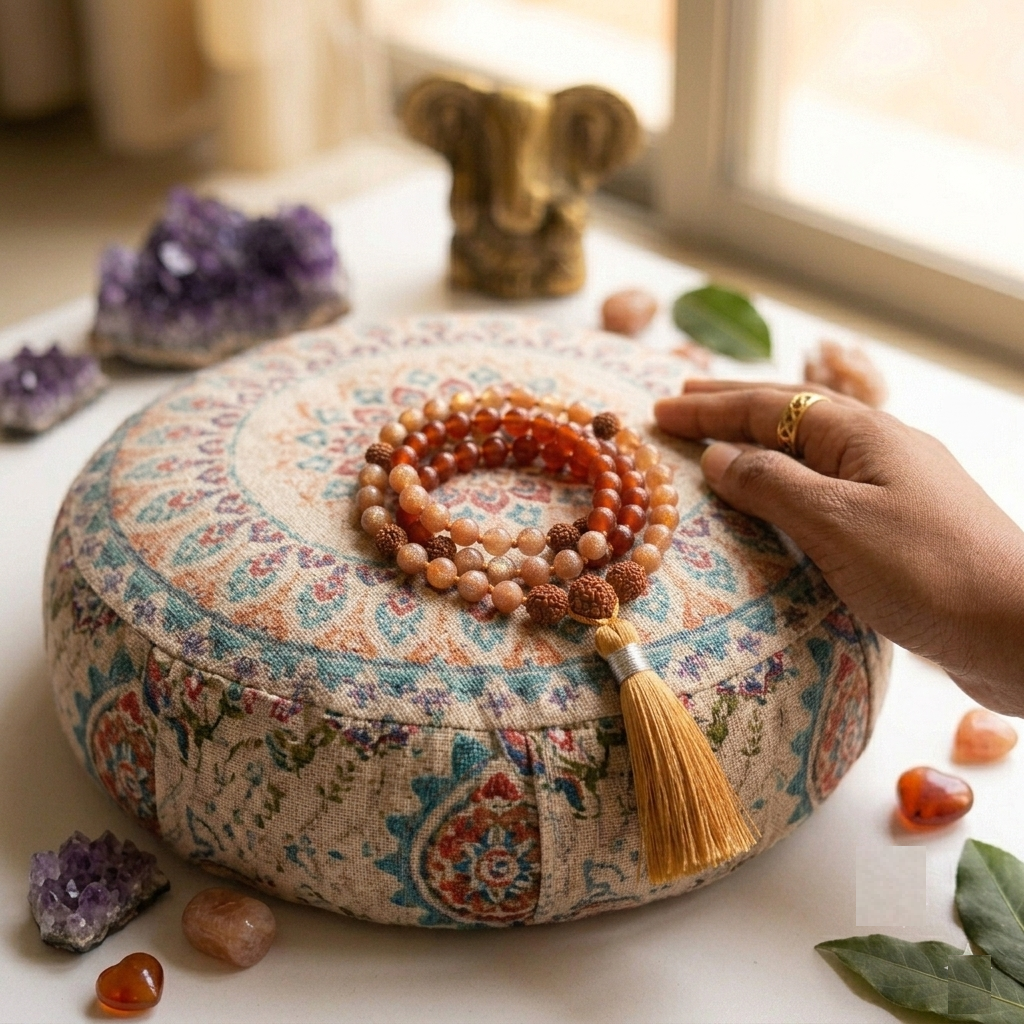
The word Mala is a Sanskrit term meaning “garland” or “necklace.” At its core, a Mala is a strand of prayer beads traditionally used in Hinduism, Buddhism, and yoga to keep count while reciting mantras, prayers, or intentions. This practice is known as Japa meditation (repetition of a sacred sound).
While they can be made from a wide variety of materials, standard authentic Malas share a few distinct anatomy features:
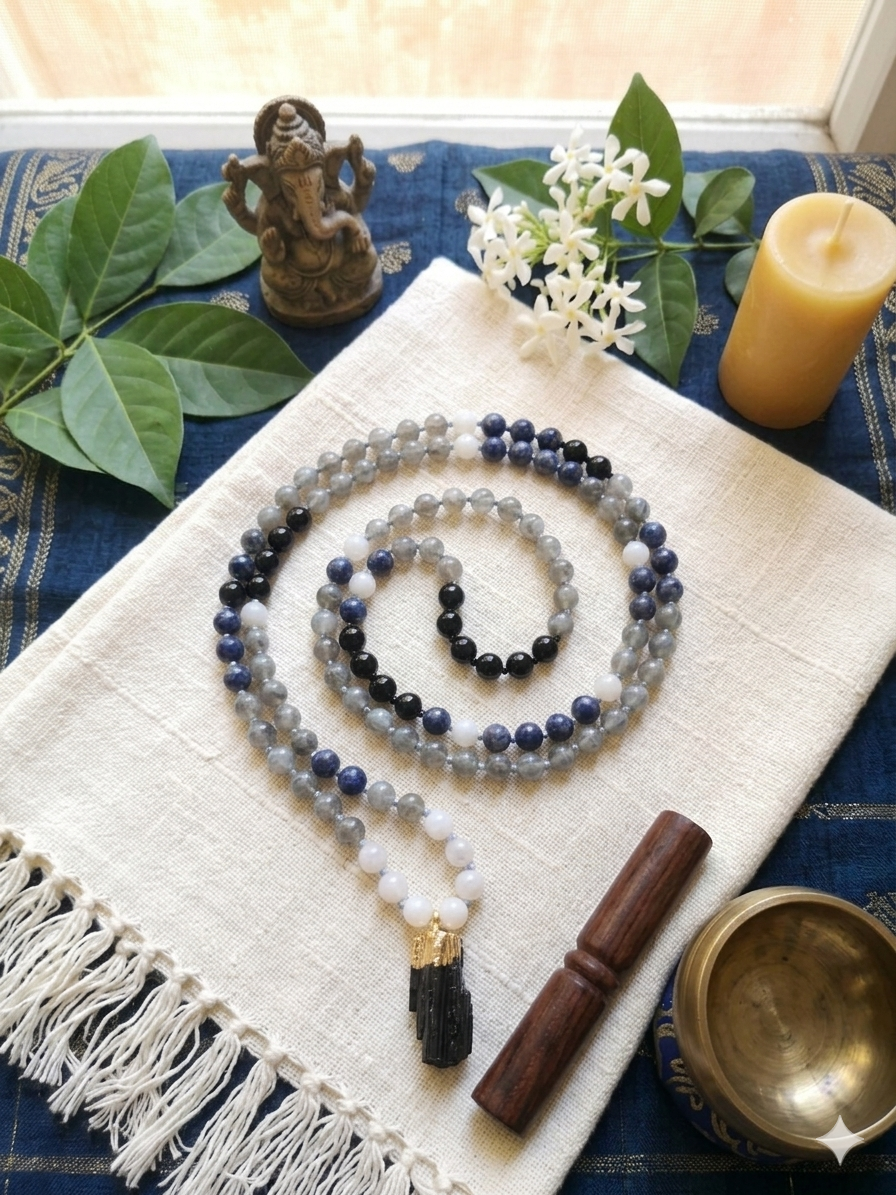
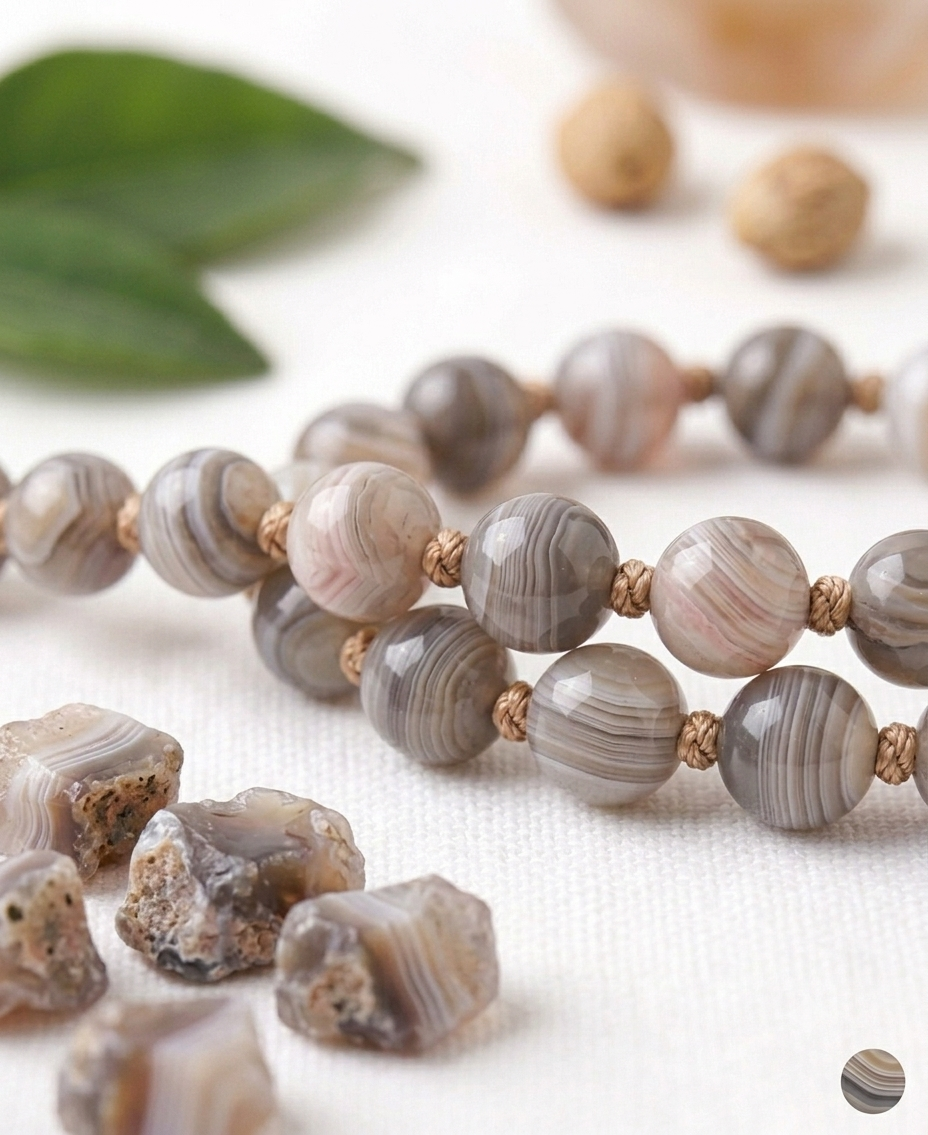
Knots between the beads: High-quality Malas feature a hand-tied knot between every single bead. This not only makes the necklace stronger but also keeps the beads perfectly spaced for your fingers during meditation.
The 108 Beads: The main body of the necklace consisting of exactly 108 beads.
The Guru Bead: The 109th bead at the very center. It represents the student-teacher relationship and serves as a starting and ending marker for meditation.
The Tassel: Hanging below the Guru bead, the tassel symbolizes the gathering of all the energies into one focus, as well as our connection to the divine.
The History Behind the Mala
The use of prayer beads didn’t start with modern wellness trends. The origin of Mala beads traces back over 3,000 years to ancient India.
Historically, they were rooted in early Vedic traditions. Spiritual practitioners used them to ground their minds during intense meditation sessions. The physical act of moving one’s fingers from bead to bead acted as an anchor, stopping the brain from wandering off into daily worries.
As Buddhism spread across Asia, Mala traditions traveled with it, adapting to different cultures. Eventually, the concept of prayer beads traveled to the West, inspiring the creation of Christian Rosaries and Islamic Tasbih beads.
Why 108? The Sacred Meaning of the Number
The most frequent question people ask is: “Why does a Mala have exactly 108 beads?”
The number 108 is considered deeply sacred across mathematics, astronomy, and eastern spirituality. There isn’t just one reason for this number—there are many beautiful, interconnected explanations:
1. The Geometry of the Universe
Ancient Vedic astronomers realized that 108 connects our earth to the heavens. Remarkably, the distance between the Earth and the Sun is roughly 108 times the diameter of the Sun. Similarly, the distance between the Earth and the Moon is roughly 108 times the diameter of the Moon.
2. The Heart Chakra
In yogic philosophy, there are energy lines called nadis that intersect within our bodies. It is believed that exactly 108 energy lines converge to form the Anahata (Heart) Chakra. By reciting a mantra 108 times, you are metaphorically purifying and activating your heart center.
3. Spiritual Mathematics
The number 108 can be broken down into individual spiritual components:
- 1 represents the Higher Truth, God, or the singular universe.
- 0 represents emptiness or humility—complete stillness in spiritual practice.
- 8 represents infinity and timelessness.
4. The Sanskrit Alphabet
The ancient sacred language of Sanskrit consists of 54 letters. Each letter has both a masculine (Shiva) and feminine (Shakti) energy form. $54 \times 2 = 108$.
Traditional Materials and Their Meanings
What your Mala is made of can amplify different intentions. Traditionally, Malas are crafted from organic elements harvested from nature:
| Material | Significance | Best Used For |
| Rudraksha Seeds | Formed from the seeds of a sacred tree; traditionally associated with Lord Shiva. | Protection, inner peace, and spiritual grounding. |
| Sandalwood | A fragrant, soothing wood known for its cooling properties. | Calming an overactive mind and attracting positive energy. |
| Gemstones | Semi-precious stones like Rose Quartz, Amethyst, or Jade. | Harnessing specific energetic healing qualities (e.g., love, intuition, abundance). |
How to Choose Your Mala
If you are looking to bring a Mala into your life, the best advice is simple: go with your intuition.
Don’t overthink the definitions or properties at first. Look at different Malas, notice which colors, textures, or stones naturally draw your eye, and trust that feeling. Often, the Mala you are visually or physically attracted to is exactly the energy your spirit is looking for.
Whether you use it to count your morning intentions or simply wear it as a daily reminder to take a deep breath, a Mala is a beautiful partner on the journey toward a more mindful life.