

Knotted vs. Unknotted Mala Beads: Which Style is Best for You?
If you are shopping for your very first Mala necklace, you will notice that even though almost all traditional Malas have 108 beads, they can look and feel completely different.
Beyond the choice of gemstones or sacred woods, one of the biggest structural differences you will come across is how the beads are strung. Some Malas feature a tiny, deliberate knot between every single bead, while others allow the beads to slide smoothly against one another on a continuous cord.
Is this just a matter of style, or is there a functional and spiritual difference between the two?
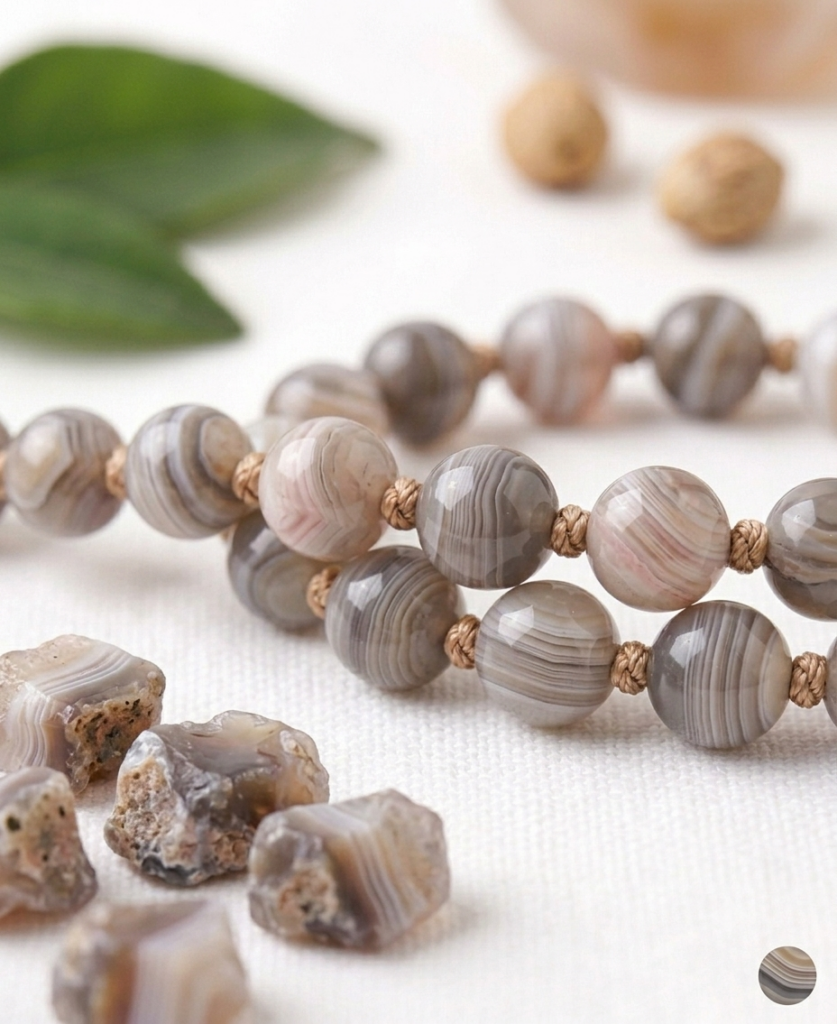
Let’s dive into the anatomy of knotted vs. unknotted Malas so you can choose the perfect design for your personal practice.
The Traditional Art of Hand-Knotted Malas
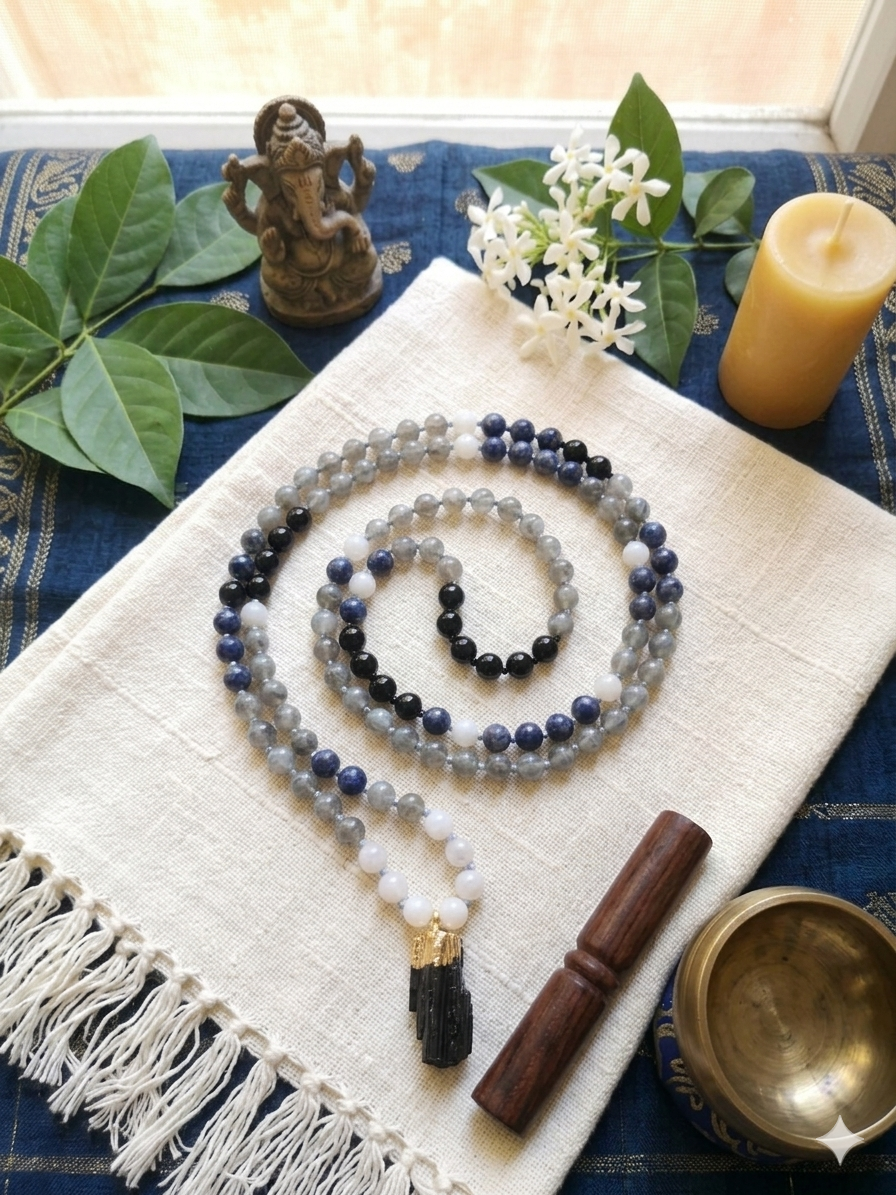
In the world of high-quality, authentic Malas, hand-knotting is considered the gold standard. This traditional method involves an artisan taking a single, continuous strand of durable cord (usually silk or nylon) and tying a tiny, secure knot by hand between each individual bead.
( Bead ) ---> [ KNOT ] ---> ( Bead ) ---> [ KNOT ] ---> ( Bead )
The Spiritual Meaning
The process of hand-knotting a Mala is a form of active meditation for the artisan. As each knot is tied, a mantra or blessing is often spoken over the cord. Spiritually, the continuous thread represents the divine cosmic energy that connects us all, while the individual knots represent the divine sparks of life—or the small challenges and triumphs we encounter along our journey.
The Benefits:
- Perfect for Japa Meditation: The knots create the perfect, uniform spacing between the beads. This makes it incredibly easy for your thumb to glide from bead to bead without looking, preventing your fingers from slipping.
- Safety and Longevity: If your Mala accidentally catches on something and snaps, the knots ensure that only one bead falls off, rather than all 108 scattering across the room.
- A Beautiful Flow: Hand-knotted Malas have a fluid, textile-like drape. They hang softly against the contours of your body and feel like a seamless extension of your skin.
The Modern Fluidity of Unknotted Malas
Unknotted Malas (sometimes called “smooth-strung” Malas) are created by threading the 108 beads directly onto a cord or wire next to each other, without any intervening knots. Sometimes, makers will place a small metal accent bead every 27 beads to help with counting, but the main body remains unknotted.
The Spiritual Meaning
Without knots to separate them, the beads touch one another directly. Spiritually, this can symbolize the seamless, uninterrupted flow of time, breath, and consciousness. It represents unity—the idea that there are no gaps or separations in our spiritual evolution.
The Benefits:
- Ideal for Wearing: Because there are no knots taking up extra space, unknotted Malas are significantly shorter than knotted ones. If you are petite or want a Mala that doesn’t hang too low past your waist, an unknotted style is much easier to wear as a sleek, daily necklace.
- Perfect for Stacking: Unknotted Malas are often strung on a high-quality elastic stretch cord. This allows you to effortlessly wrap the 108 beads around your wrist like a stacked bracelet without worrying about the bulk of knots.
- Tactile Sound: When you move, the beads gently click against one another. Many people find this subtle, natural sound incredibly soothing and grounding throughout the day.
Comparison Table: At a Glance
| Feature | Hand-Knotted Mala | Unknotted / Smooth-Strung |
| Length | Longer (due to space from 108 knots) | Shorter, more compact |
| Best For | Traditional seated Japa meditation | Daily wear, active lifestyles, wrist wrapping |
| Feel | Fluid, soft drape, distinct tactile texture | Sleek, smooth, structural |
| Durability | High (beads won’t rub together) | High (if on stretch cord/wire), but beads rub over time |
Which One Should You Choose?
The decision ultimately comes down to how you intend to use your Mala most often:
- Choose a Hand-Knotted Mala if: You plan to sit down daily for traditional mantra meditation, you love the classic, flowing look of a long bohemian necklace, and you value old-world craftsmanship.
- Choose an Unknotted Mala if: You primarily want to wear your Mala out into the world, you prefer wrapping it around your wrist as a bracelet, or you like a sleeker, more modern aesthetic.
Whichever style speaks to you, remember that the true energy of the Mala comes from your breath and your intention. Both styles are beautiful vehicles designed to bring a little more peace and mindfulness into your everyday life.